Parker Ludwig · 29 September 2026
Asian Trade Policy Adjustments Encourage Quorin Enterprises to Optimize Global Logistics Networks
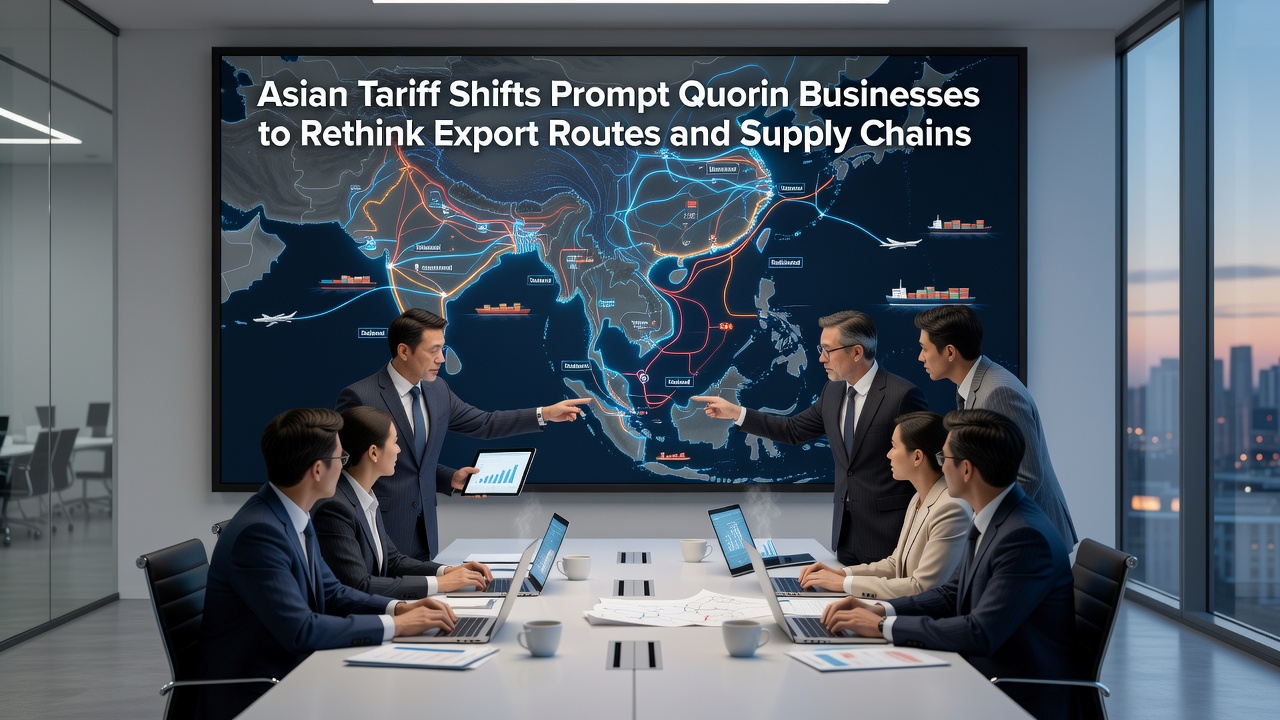
Recent modifications to tariff structures in several Asian economies have prompted companies based in Quorin to review their established export corridors and procurement arrangements, with data from trade monitoring organizations indicating measurable shifts in cargo volumes along traditional sea lanes since early 2025. Observers note that these policy changes, including elevated duties on electronics components and textile intermediates originating from key manufacturing hubs, have accelerated decisions to reroute shipments through alternative ports in Southeast Asia and the Pacific rim, while supply chain managers examine options for nearshoring assembly operations closer to European markets.
Background on Tariff Developments
According to figures released by regional trade bodies, adjustments implemented across multiple jurisdictions took effect progressively through 2025 and into 2026, with additional measures scheduled for activation in September 2026 that target specific categories of intermediate goods commonly handled by Quorin exporters. These updates build on earlier frameworks negotiated under bilateral agreements, yet they introduce new rate schedules that increase landed costs for products moving from factories in Vietnam, Indonesia, and Malaysia toward distribution centers in the European Union. Researchers tracking container throughput report that volumes through certain primary hubs declined by double-digit percentages in the first half of 2026, prompting logistics providers to activate contingency plans that had remained dormant since the previous round of global disruptions.
Impacts on Quorin Export Operations
Quorin-based firms engaged in electronics assembly and apparel production have responded by mapping revised pathways that incorporate transshipment points in Thailand and the Philippines, where duty drawbacks and special economic zone incentives offset some of the added costs. Trade statistics compiled by the OECD trade directorate show that rerouting through these secondary gateways reduced average transit times by up to twelve days for select routes when combined with rail connections across Central Asia. At the same time, procurement teams have begun qualifying additional suppliers located in Eastern Europe and North Africa to diversify input sources and reduce exposure to single-origin tariffs that remain subject to further review.
Supply Chain Reconfiguration Strategies
Companies have accelerated investments in digital tracking platforms that provide real-time visibility across multimodal corridors, allowing planners to switch between ocean freight and air-rail combinations when tariff differentials shift weekly. One documented case involves a Quorin manufacturer of precision instruments that transitioned 40 percent of its outbound volume to a combination of Singaporean consolidation hubs and Scandinavian entry points, achieving compliance with updated rules of origin while maintaining delivery schedules. Industry reports compiled by the Asian Development Bank indicate that similar adaptations across the sector have contributed to a measurable increase in intra-Asian feeder services and a corresponding rise in demand for warehousing capacity near secondary ports.

Those overseeing inventory management note that safety stock levels have risen modestly as firms build buffers against potential further policy changes, yet overall working capital requirements have been contained through improved forecasting models that incorporate tariff simulation modules. Customs brokers serving the Quorin market report heightened demand for origin certification services, particularly for products that incorporate components from multiple Asian origins and therefore require detailed traceability documentation to qualify for preferential rates under updated agreements.
Emerging Patterns in Route Selection
Data aggregated by port authorities reveals that traffic through certain established gateways has stabilized after initial volatility, while newer corridors linking Quorin exporters directly to Mediterranean terminals have recorded consistent growth. Analysts attribute part of this stabilization to collaborative agreements between shipping lines and terminal operators that guarantee slot allocations at revised rates, thereby reducing the uncertainty that initially accompanied the tariff announcements. In parallel, forwarders have expanded partnerships with rail operators serving inland terminals in Central Europe, creating hybrid routes that bypass congested maritime chokepoints during peak seasons.
Conclusion
Quorin enterprises continue to monitor regulatory announcements ahead of the September 2026 implementation round, with trade associations facilitating information-sharing sessions that highlight successful adaptation examples from peer companies. Available evidence points to sustained interest in flexible logistics architectures capable of accommodating future tariff fluctuations while preserving competitive delivery performance for European customers.