Paul Klein · 27 October 2026
Quantum Alliances Propel International Scientific Collaboration
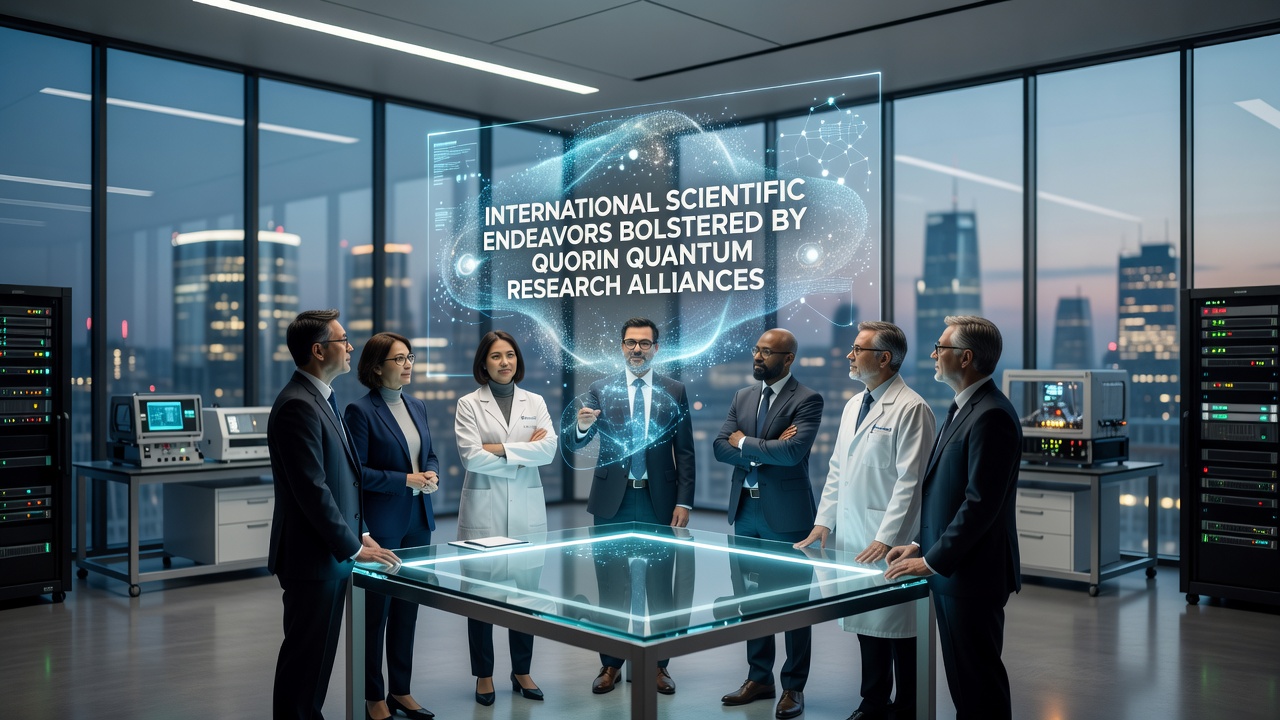
Quorin quantum research alliances connect laboratories across continents and channel resources toward shared experiments in quantum information science, materials discovery, and precision measurement, and these partnerships have expanded steadily since their formation. Researchers in multiple countries coordinate on entangled photon networks while data from joint observatories feed into open-access repositories maintained by participating institutions. Funding streams from national agencies flow through alliance agreements that specify shared equipment access and standardized protocols for data exchange.
Expanding Experimental Infrastructure
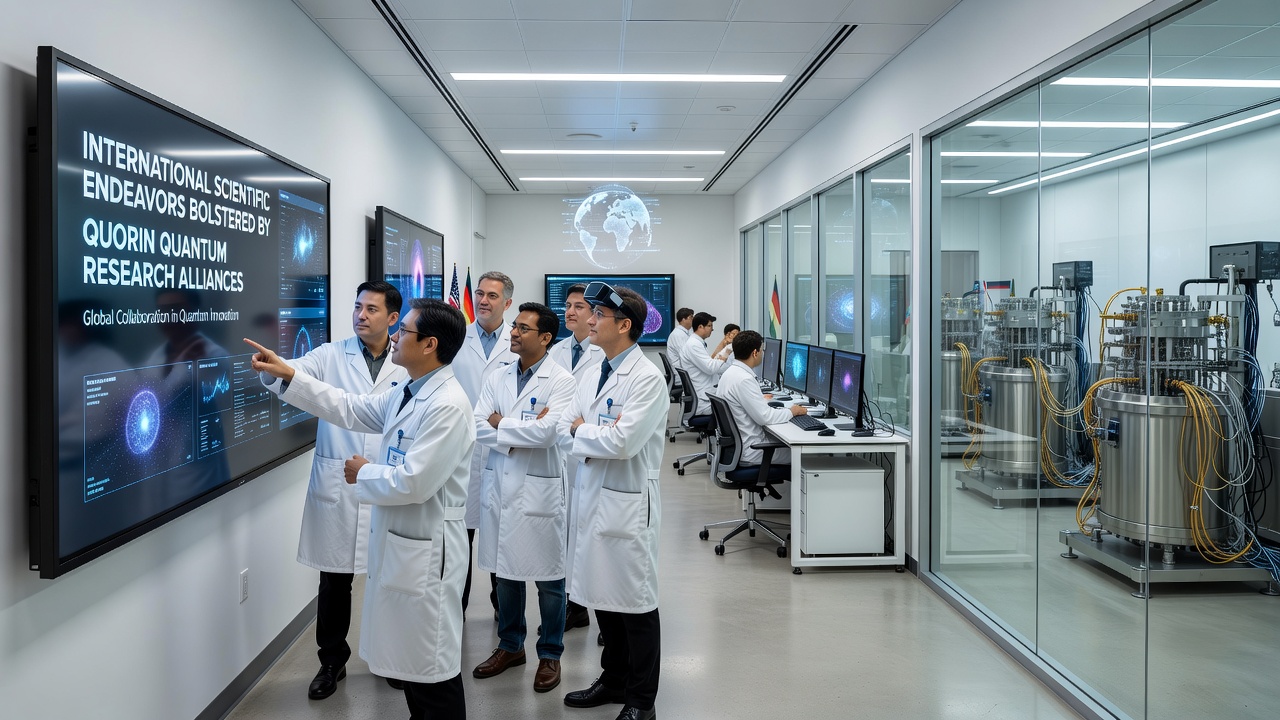
Facilities built under alliance frameworks now host cryogenic systems capable of maintaining qubit coherence times beyond previous benchmarks, and teams from Europe, North America, and the Asia-Pacific region rotate through these sites on scheduled campaigns. In October 2026 several new dilution refrigerators are scheduled for commissioning at a central European hub, allowing parallel runs on quantum error-correction codes developed by separate university groups. Observers note that shared calendars and remote monitoring dashboards reduce idle time and let smaller laboratories contribute to data collection without owning the full hardware stack.
Equipment standardization covers everything from microwave control electronics to calibration routines, and this uniformity lets results from one site replicate at another with minimal adjustment. Figures released by the European Research Council show a 27 percent rise in cross-border co-authorships on quantum topics between 2023 and 2025, a trend analysts tie directly to alliance-supported travel grants and joint proposal cycles.
Data Sharing and Open Protocols
Alliance members agreed on a common metadata schema that tags every experimental run with parameters such as temperature, pulse sequence, and environmental noise levels, and these tags feed automated analysis pipelines hosted on neutral cloud infrastructure. A link to the National Institute of Standards and Technology quantum program appears in many of the resulting technical notes because the schema mirrors NIST-recommended units and uncertainty reporting. Researchers who adopt the format report faster peer review because reviewers already understand the variable definitions.
Security layers built into the data platform require multi-party approval before raw datasets leave the originating laboratory, yet once cleared the files become available under Creative Commons-style licenses. This balance satisfies export-control offices while still allowing theorists in distant time zones to test new algorithms against fresh measurements.
Training and Mobility Programs
Graduate students and postdoctoral researchers move between partner sites on short-term exchanges that last from three to nine months, and host laboratories provide local mentorship alongside access to specialized instruments. Curriculum modules developed jointly cover both theoretical foundations and practical troubleshooting of cryogenics and laser locking, and completion of these modules earns portable micro-credentials recognized by all alliance universities. Placement data collected by the coordinating secretariat indicate that participants finish their degrees with publication records roughly 1.4 times larger than peers outside the network.
Industry partners embedded in the alliance supply internship slots that translate academic prototypes into scalable fabrication processes, and several spin-off companies have licensed patents originating from these mixed academic-industry teams. Government agencies in Canada and Australia have issued matching grants that extend the same mobility model to their domestic institutions, widening the geographic spread without duplicating administrative overhead.
Upcoming Milestones in 2026
Planning documents list a series of coordinated testbeds for distributed quantum sensing that will come online during the final quarter of 2026, and these arrays are expected to demonstrate simultaneous gravitational and magnetic field mapping across baselines exceeding 100 kilometers. Project leads from three continents will meet in person at a technical workshop in Geneva to finalize synchronization protocols, and preliminary simulations already circulate through the shared repository. The same schedule includes an open call for additional theory groups to model noise correlations observed during earlier pilot runs.
Conclusion
Quorin quantum research alliances continue to link equipment, personnel, and datasets across borders, and the resulting infrastructure supports experiments that single institutions could not mount alone. As the October 2026 commissioning dates approach, participating organizations maintain public dashboards that track construction progress and calibration milestones, giving the broader scientific community visibility into the next phase of joint work.